 |
| Potato |
When and How To Plant Potato Seed
Potatoes are grown from 'seed' potatoes which grow better if they are allowed to 'sprout' before planting. First purchase the seed potatoes in late January. These are available from seed catalogues or your local garden centre. Look for seed potato which is certified as free from disease and select healthy looking examples about the size of an egg.
In mid February, place the seeds in boxes (for small amounts, cardboard egg boxes are ideal) in a light airy position at a temperature of roughly 10°C / 50°F. See right.
The potato seed should be positioned so the the sprouts are uppermost and the 'stalk' end (where they were severed form the parent plant) is at the bottom. Sometimes this is a bit difficult to judge, but if you get it wrong, and the potatoes sprout from the bottom end, simply rub off the sprouts and turn the potato to the correct position. The picture below shows the stalk end of a potato which should be at the bottom when placed in the egg boxes.
As the potato seed produce sprouts, remove all but the topmost four to ensure that they receive all the goodness of the seed potato. The ideal sprout length at planting time is 2.5cm / 1in although this is not critical. What is critical, is that the sprouts are green and not white coloured. White sprouts are caused by not enough light. Click the picture to enlarge.
If the sprouts appear too early for planting the potatoes outside, simply rub them off cleanly and they will re-sprout in a couple of weeks time. Research has shown that the sprouts can be removed five times without any ill effect on the sprouts which will replace them.
Mid March is the ideal time to plant the sprouted potatoes in the open ground. Plant 'earlies' about 30cm / 12in apart from each other, in rows which are 60cm / 2ft apart. Plant maincrop potatoes about 35cm / 15in apart, in rows which are 75cm / 2ft 6in apart. Where you are planting more than one row, the rows should (ideally) run from North to South to allow each plant its full share of sun.
Dig a trench about 10cm / 4in deep, placing the potatoes in it with the sprouts pointing upwards. Hand fill the trench over the potatoes trying to avoid damaging any sprouts. Scatter bonemeal or similar long lasting fertiliser over the top soil and rake it in.
How to Grow Potatoes For Christmas Eating
In many areas it's quite possible to grow your own potatoes for eating in October through to Christmas. Potato plants produce good sized tubers in 65 to 100 days depending on variety. Click here for a separate page on how to plant potatoes in August.
Caring for Your Potatoes
In many areas, it's quite possible to plant potatoes in August. Depending on weather, you should be able to start harvesting your potatoes two to three months later. With a bit of luck you will also have potatoes on your Christmas table and a few weeks into the New Year. This is an easy guide with pictures showing exactly how to go about planting potatoes in August. We will add a final picture on the right when December 25th comes along and I harvest some of our potatoes on Christmas Day!
Order your seed potatoes from an online supplier, we ordered ours from Dobies. They supply potatoes which are ready to be planted immediately and require no special treatment. We ordered the variety Vales Emerald but demand was too high and we actually received Maris Peer. This is a second early variety which is good for boiling, chips and wedges. It's also good cold for salads. Very tasty! |

|

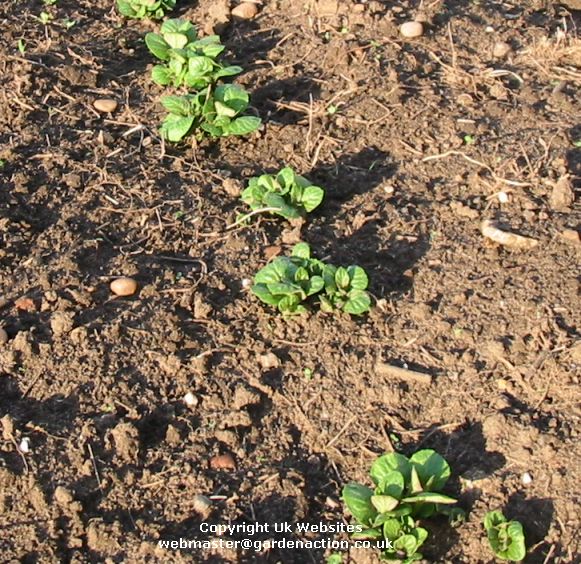
We planted our potatoes on 4th August and this is a picture them three weeks later on 25th August, not bad progress by my reckoning! Don't plant potatoes on land that has been used for potatoes over the past two years and if the soil is low in nutrients after growing a crop earlier in the year, apply some well rotted compost or general purpose fertiliser on the surface of the soil. |
When the potato plants are around 25cm /9in high earth them up. To earth up potatoes, simply use a hoe or rake to pull up earth between the rows around the stems. No problem if some of the leaves are covered, the potato plant will simply grow through.
Here are the potatoes on 13th September, yes really only 6 weeks later!
It's all down to the soil which has been warmed by the last 2 months of summer. These potatoes are about a month from being ready for harvest. Our ambition of potatoes for Xmas may have been premature because the potatoes have actually matured even earlier than we expected!
Potatoes planted in August are prone to blight infection if the long periods of damp occur. This is a serious disease which can be avoided. First, pick a resistant variety. Avoid the following varieties if you can: King Edward, Arran Comet, Arran Pilot, Epicure, Foremost, Golden Wonder, Home Guard, Kerr’s Pink, Majestic, Sharpe’s Express and Ulster Chieftain. Varieties which have some resistance to blight include Cara, Estima, Kondor, Maris Peer, Pentland Crown, Valor and Remarka.
Second, spraying with Bordeaux mixture before the plants are infected provides a good degree of control. Note that tomatoes also suffer from blight so the same advice applies to them. If the weather is warm and damp for a few days, then start spraying with Bordeaux mixture, especially if the forecast is for more of the same weather. Spraying should occur at 14 day intervals or according to the instructions. If you see any leaves with brown freckles on them, remove and burn as soon as possible because they are infected with blight.
The potatoes should be ready for harvest when the plant stops increasing in size. At this time flowers or buds will normally appear. Harvest only those you need. Mature potatoes can remain in the ground for a month or more with no ill-effects
If a frost hits the plants, the tops will go brown and start to die. However, the potatoes under ground will still continue to grow although more slowly. Good luck with your potatoes, and hopefully a Christmas harvest will be yours
After the potatoes plants have grown to about 20cm / 8in pull up the soil in between the rows around the plants leaving a few centimetres still showing. Repeat the exercise in two to three weeks time. The diagram to the right shows the ideal end result
During the growing season, ensure that weeds are removed and apply some long lasting fertiliser again around mid-August. A month or so after planting, the dense foliage of the plant should then block out sufficient light to deter all but the most vigorous weeds.
As the potato plant grows, do not remove or 'stop' the foliage, it is supplying food to the tubers. However, remove any flower heads or buds which appear because these will produce potato seeds which will divert energy from the potato tubers

No comments:
Post a Comment